Five market signals hospitality operators should watch heading into 2027
Share



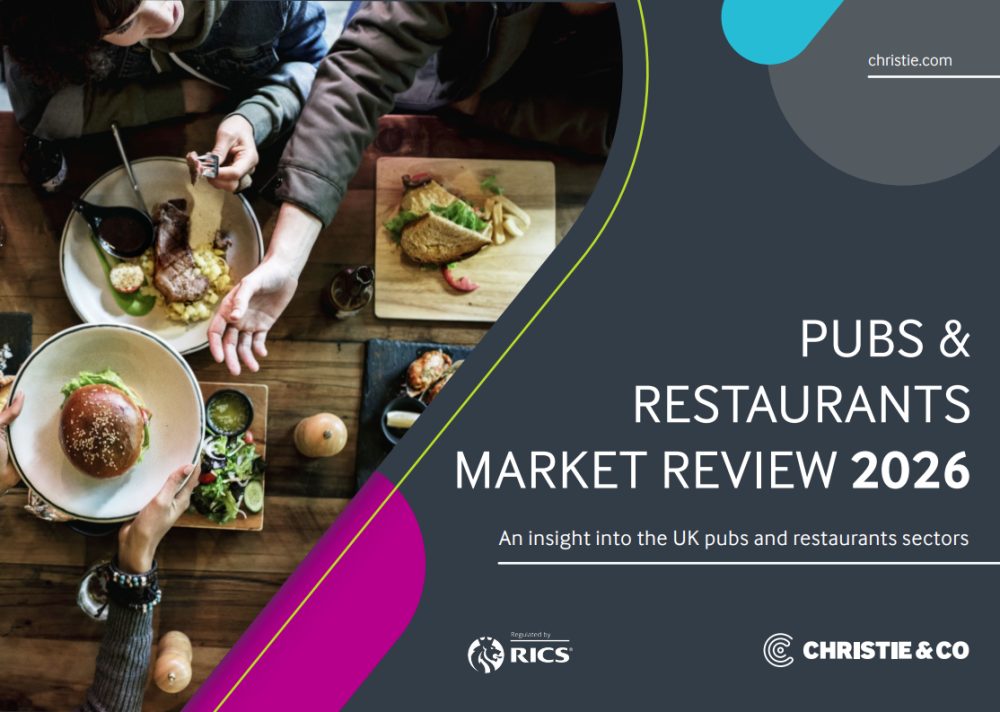
Christie & Co’s Pubs & Restaurants Market Review 2026 points to an active property market, changing customer expectations and growing demand for adaptable venues.
Stephen Owens, Managing Director for Pubs & Restaurants at Christie & Co, highlights five practical takeaways for hospitality businesses planning for the year ahead.
- 1
Buyer appetite remains strong despite economic pressure
Despite cost pressures and wider economic uncertainty, transactional activity has accelerated. From January to August 2026, Christie & Co was instructed to sell more than 360 pubs and restaurants, 22% more than in the same period of 2025, while agreed deals rose by 12.5%.
Average completion values also increased for both freehold and leasehold sales. For operators considering a sale, acquisition or refinancing, the message is clear: quality opportunities can still attract committed buyers, but realistic pricing and credible evidence of future potential remain essential.
- 2
Customers are planning occasions more
Dining out is becoming less spontaneous, raising expectations around food quality, service and the overall customer experience. Value-led and quick-service concepts are benefiting from convenience, while parts of the mid-market and premium dining segment face greater pressure.
Operators should be clear about the occasion they serve and make the value exchange easy to understand. That may mean simplifying menus, sharpening booking communications or investing in the details that make a planned visit feel worthwhile.
- 3
Simpler models can be more resilient
Some pubs are moving away from food-led models to reduce labour requirements and operational complexity.
Traditional wet-led venues continue to perform an important role as community and sporting hubs, while events, live sport and experiential offers can support footfall and spend. This has highlighted how formats that have a focused offering, in line with local demand, staffing capacity and margins, can outperform a more complicated offer.
- 4
Diversified income remains attractive
Buyer demand has been particularly strong for traditional pubs with dependable community trade and for destination venues with letting rooms. Outdoor trading space also gained attention following strong summer weather. A combination of food, drink, accommodation and events can reduce reliance on a single revenue
stream, provided each element earns its place. Operators should review underused space, seasonal capacity and the potential for complementary offers without adding unnecessary complexity.
- 5
Policy costs belong in every 2027 Plan
The Autumn 2026 Budget confirmed that business rates relief for eligible pubs, social clubs and live music venues in England will rise from 15% to 35% from April 2027, applying in 2027/28 and 2028/29. For qualifying hospitality properties, the rateable value threshold for full Small Business Rates Relief will rise to £18,000, with tapered relief up to £21,000.
For operators, business rates are an overhead that affects margins and the cash available for day-to-day trading and investment. Understanding how the policy applies to each venue is therefore important when setting realistic 2027 budgets and gives operators a clearer basis for decisions on pricing, staffing and investment.
To read Christie & Co’s Pubs & Restaurants Market Review 2026, click here.