Read our manifesto for growth


Hospitality creates places where people want to live, work and invest in Scotland.
Our sector employs 290,000 people – making it the third largest employer in Scotland and responsible for 10% of jobs.
We represent 5% of the economy, generating £15 billion in economic activity and delivering £5 billion in tax receipts for the Scottish economy.
With the right conditions, by 2031, we can create an additional 46,000 jobs, grow by 6% over the next five years and add £2.4 billion to the economy.
We have worked with our members to create six clear recommendations for the next Scottish government, to support hospitality and the people who work in the sector:
Policy recommendations
- 1
Reform business rates
Reduce bills to protect our high streets and community infrastructure.
- 2
Invest in skills
Train more people for careers in hospitality.
- 3
Support green investment
Drive investment in the sector as businesses continue to move towards net zero.
- 4
Reform planning rules
Allow hospitality to make a full contribution to regeneration.
- 5
Develop better regulation
Support hospitality by co-designing legislation with our businesses.
- 6
Appoint a champion
Ensure hospitality and tourism has an appointed voice within government.
Reform business rates
The problem:
Business rates are calculated on the basis of rateable value, a number representing the
cost of renting the business premises and turnover. Businesses that must trade in-person,
and in-community, and are therefore property-intensive, have picked up an increasing and
unsustainable share of the burden. This has led to hospitality paying 10% of the rates bill,
despite representing 3% of contributing turnover. It is a tax on high streets, city centres
and rural hubs at a time when there is concern about the loss of these assets.
The solution:
Introduce a permanently reduced business rates poundage for hospitality and leisure at a
rate of 30 pence in the pound – funded by rebalancing the burden to reflect the rise of the
online economy.
Invest in skills
The problem:
Hospitality is a crucial provider of early-stage careers and of training in a workplace setting. That makes apprenticeships extremely important to the sector, which currently has around 1,300 apprentices. However, with reduced funding in the further education sector and cuts to government funded training programmes, it is making entry to hospitality more difficult.
The solution:
Work with businesses to ensure Apprenticeship Levy funds are allocated to support
hospitality. This includes reinstating funding for the Flexible Workforce Development Fund.
UKHospitality worked with Springboard and Department for Work and Pensions delivering an essential foundational skills training module for new starters in England and Wales.
The success of that pilot and the resulting sector-based work academies shows how effective an employer-led, modular approach can be. The next Scottish government should work with us to implement a similar scheme in Scotland.
With significantly reduced access to overseas labour, it is vital the next Scottish
government supports the development of Scotland’s talent.
Case studySpringboard

The Springboard Charity changes lives by unlocking potential and opening doors to brighter futures, empowering people from all backgrounds to find rewarding careers in the hospitality industry. For 35 years, the charity has supported young and unemployed people to build their skills and confidence and become ready for work.
Before joining a Springboard programme, Laura Cunningham was on long-term sick leave and struggling with her mental health. Eventually, Laura’s determination to change led her to completing a support programme and connecting with Invest in Renfrewshire, through which she was introduced to Springboard.
The Diageo Learning for Life programme, delivered by Springboard, reignited Laura’s motivation. She enjoyed the course, especially the opportunity to learn about bartending, and felt empowered by the supportive environment.
“It felt like a little family, we all rooted for each other. The coursework was clear, and I genuinely looked forward to learning.”
Laura completed her work placement at the Holiday Inn bar, where her confidence soared.
“By the end, I was pouring two pints at once while chatting with guests about whisky!”
Laura’s hard work paid off when she was offered a job interview and then a part-time position at reception, with opportunities to help behind the bar.
“The mock interviews really helped. I felt prepared and confident. I never thought I could handle an interview, but I did.”
Support green investment
The problem:
As a major user of energy and food, the sector must be part of the wider net zero journey.
Currently, investment costs for addressing carbon output are prohibitive, which slows the
pace of change.
The solution:
Support businesses as they transition to net zero by incentivising investment in green
energy and decarbonisation. In particular our businesses would welcome support to make
heat in buildings more efficient and efforts to reduce food waste.

Reform planning rules
The problem:
Planning policy and practice often makes it difficult to establish new, or expand existing,
businesses. Businesses often find that applications for change of use, or for building
extensions to kitchens or adding bedrooms to accommodation take longer than they
should. Resistance to hospitality businesses can be as serious a barrier to development as
resistance to new housing.
The solution:
Reform the planning system to put hospitality-led regeneration at the heart of high streets
and communities, with a faster, streamlined approach to planning applications for
hospitality businesses.
Case studyRutherford Park

In August 2025 Scottish Borders Council approved the planning application for a near-£12 million luxury holiday lodge park on a former golf course.
The 79-lodge development at Rutherford Park, between West Linton and Carlops, was backed by UKHospitality Scotland, The Scottish Tourism Alliance, South of Scotland Destination Alliance, Scottish Borders Chamber of Commerce, the local college and local transport operator Houston’s Coaches.
All organisations and businesses identified the benefits of bringing increased visitor spend to the area and the resulting creation of local jobs, during construction and once open and operational.
In addition to the holiday lodges, the project will incorporate a hub building comprising a reception, leisure facilities, food and drink and retail. There will also be a nine hole golf course alongside alterations and refurbishment of the existing clubhouse, with landscaping, including tree planting.
Local hospitality businesses and attractions are also set to benefit from the development and the renewed interest in the area that Rutherford Park will bring.
The local community will also benefit from new safe routes for cycling and walking.
Develop better regulation
The problem:
Over the last years, our businesses have been subject to a raft of legislation, that either
resulted in increased costs, or threatened them. Complex visitor levy legislation, the
Scotland-only Deposit Return Scheme, restrictions on the promotion of high fat, salt and
sugar foods and a wide-ranging consultation on restricting alcohol advertising and
promotion were part of this mix.
The solution:
The Scottish government should engage with UKHospitality Scotland and our member
businesses at the earliest point on policy that will impact on hospitality. In doing so, we can
help design regulations that deliver the government agenda, whilst ensuring consumers
continue to have trust in our businesses.

Appoint a champion
The problem:
For such important sectors, the contribution of hospitality and tourism is often overlooked
or simply taken for granted by government and politicians in Scotland. This has resulted in
a lack of understanding of the breadth and delivery of our businesses, as well as a lack of
support, on business rates for example, at crucial points.
The solution:
Establish a ministerial post at the heart of government, with responsibility to work with and
secure support for hospitality and tourism.
Case studyEdinburgh International Conference Centre
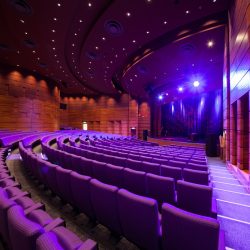
Since opening 30 years ago, the Edinburgh International Conference Centre (EICC) has welcomed more than two million delegates, hosted around 5,000 events, and generated close to £1 billion in economic benefit for Edinburgh and Scotland.
Business events at the EICC bring together people from across the public, private and academic sectors to share ideas, build partnerships and invest in Scotland’s future. Delegates come to the city to do business, and in doing so they support the tourism infrastructure that underpins Scotland’s wider economy, from hotels and restaurants to cultural venues and local suppliers.
Recent VisitBritain research shows that delegates attending events in Scotland spend almost twice the UK average, with an average of £906 per trip. Overseas attendees spend significantly more and stay longer. Edinburgh also leads the UK for delegate intent to return, with 87% planning to visit again and 80% looking to grow business relationships as a result of their experience.
Together with partner venues in Glasgow and Aberdeen, the EICC continues to help Scotland punch above its weight globally, positioning the country as a progressive and high-value destination for business, research and innovation.
Find out more
April cost increases will force two-thirds of hospitality to cut more jobs
Increases to employment costs and business rates will once again cause job losses and hit business viability, the hospitality sector warns.

Holiday tax would hit consumers with £1.6 billion tax rise
New economic analysis reveals the Government’s proposed holiday tax would shrink GDP and cause thousands of jobs losses.

Holiday tax impact report
New modelling lays bare the devastating impact a holiday tax in England would have on holidaymakers, businesses and the economy.